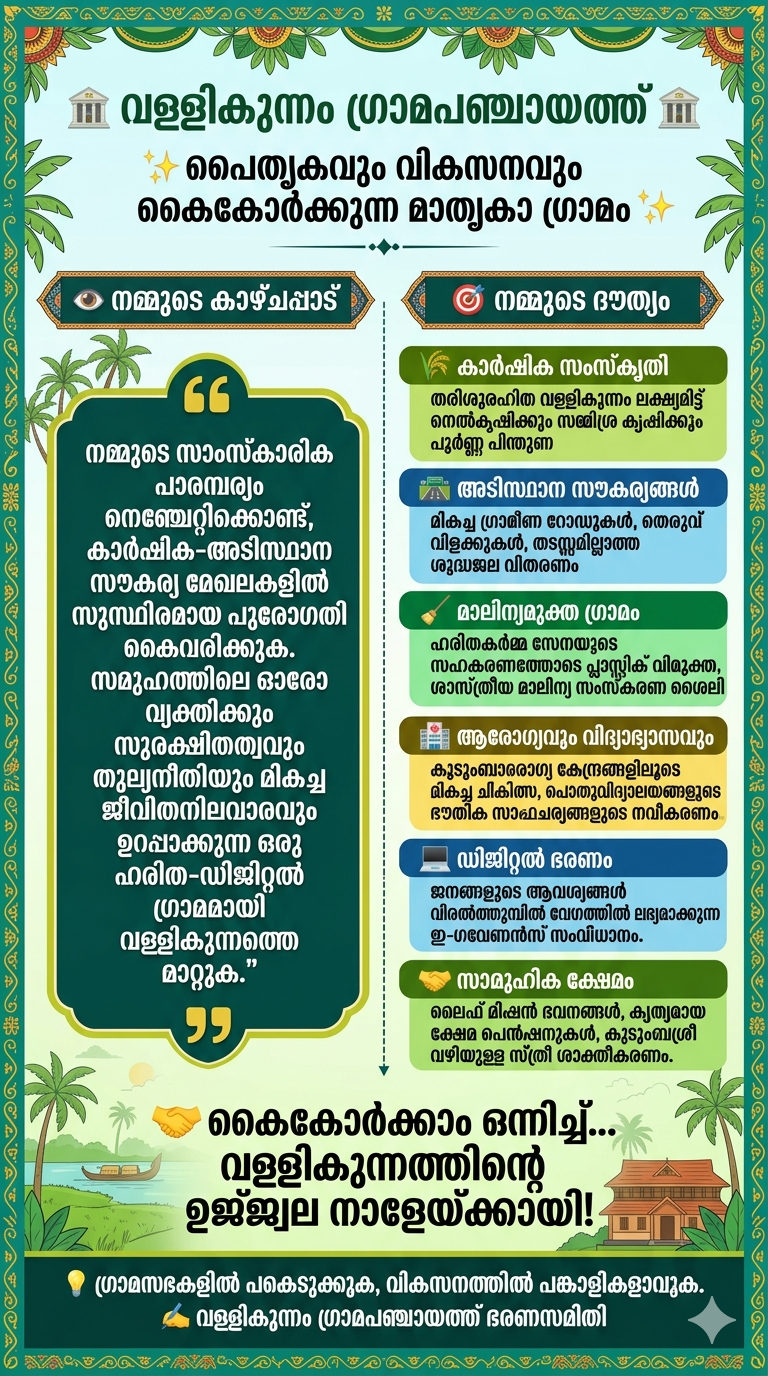

Vision and Duty
As a local government body, the main vision and objectives of a panchayat are focused on improving the living standards of the people and the overall development of the area.
The main visions of a model panchayat can be categorized into the following areas:
1. Sustainable and comprehensive development
Infrastructure development: Ensure good roads, drinking water supply, street lights, and proper waste management system.
Agricultural progress: Promote traditional agriculture, provide subsidies and modern technologies to farmers, and expand fallow farming.
2. Social welfare and equality
Upliftment of the poor: Ensure housing for the homeless through schemes like Life Mission, and ensure that pensions and other welfare schemes reach the right beneficiaries.
Dowry-child welfare: Strengthen the Kudumbashree movement and make women financially self-sufficient. Improve the physical conditions of Anganwadis.
3. Health & Education
Health Care: Upgrading Primary Health Centers (PHCs) to Family Health Centers and providing the best treatment and free medicines to the people. Intensifying epidemic prevention activities.
Public Education: Making government schools hi-tech and ensuring quality education by improving physical conditions.
4. Environmental Protection
Green Kerala: Implementing plastic-free panchayat and 'Malinyamuktam Nava Kerala' schemes. Strengthening the work of Harithakarma Sena.
Water Conservation: Reviving canals, streams and ponds and promoting rainwater harvesting.
5. Digital & Transparent Governance
E-Governance: Delivering certificates and services online (for example: electronic service delivery) to the people quickly without going to the panchayat offices.
Public Participation: Gram Sabhas should meet regularly and give priority to the opinions and needs of the people in development projects. Ensure corruption-free and transparent governance.
In short: The true vision of a Panchayat is to "make the most of its resources, without harming the environment, and to provide the fruits of development and welfare to the last person in the society".